Transfers
Move money between your accounts instantly, or send to other banks with real-time payments.
Everything you need to master CommBank NetBank — secure log in, instant transfers, bill scheduling, savings goals and card controls — explained step by step with visuals.
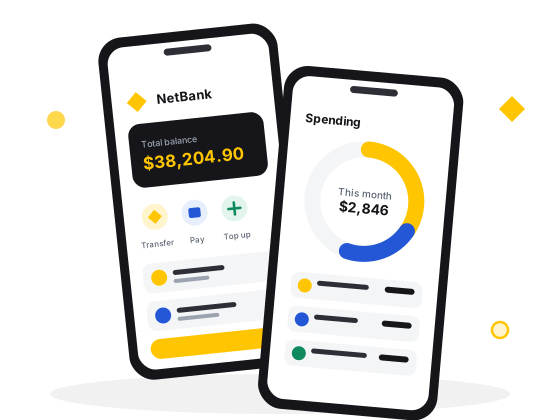
Six everyday jobs, done in a couple of taps. Each one is covered in detail below.
Move money between your accounts instantly, or send to other banks with real-time payments.
Schedule once-off or recurring payments and get reminders before every due date.
Create goals, automate round-ups and watch progress bars fill in real time.
Freeze a card, set limits, and toggle online or international payments in one tap.
Get notified the moment money moves, a login happens or unusual activity appears.
Automatic categories, monthly summaries and forecasts of upcoming cash flow.
The login flow is where your security starts. Follow this sequence every single time.
Type the official CommBank address into the browser or open the official app. Do not follow links from emails, SMS or ads.
Your client number identifies you. It is not secret, but treat it with care — combined with your password it opens the door.
Use a long, unique password that you do not reuse anywhere else. A password manager makes this effortless.
On a new device — or whenever the system wants extra certainty — approve the sign-in with a one-time code or biometrics.
Glance at your balance and last login. Something unexpected? Stop and contact support before doing anything else.
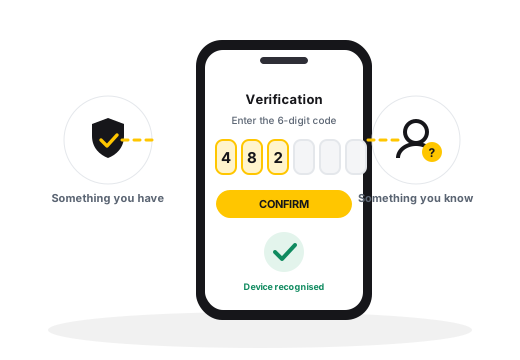
CommBank will never ask for your full password by email, phone or SMS. Any message asking you to "verify your account" through a link is almost certainly phishing. More examples are in the Security Centre.
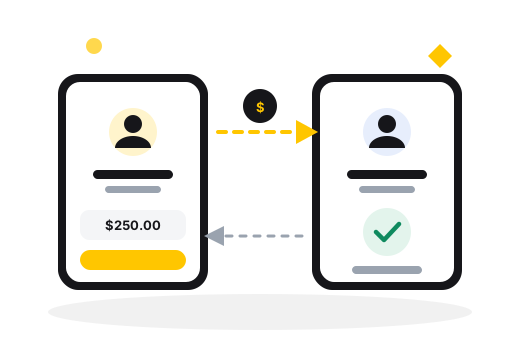
Sending money in NetBank takes three decisions: who, how much, and when. Save a payee once and every future transfer is two taps.
New payees can carry a short holding period on large amounts. That delay is a fraud brake, not a bug.
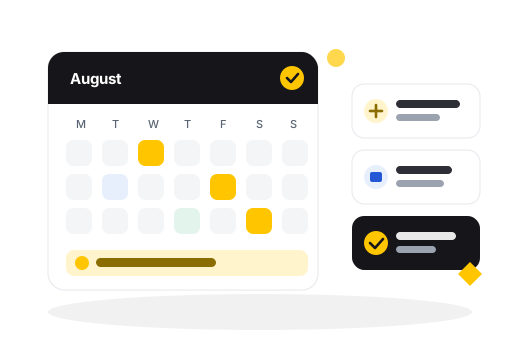
NetBank turns a stack of due dates into a single calendar. Add a biller, pick the amount and frequency, and the app reminds you before each payment leaves the account.
| Feature | What it does | Where to find it | Cost |
|---|---|---|---|
| Instant transfers | Move money between CommBank accounts or to other banks in real time | Home > Transfer | Included |
| Bill scheduling | Recurring and one-off payments with reminders | Home > Pay bills | Included |
| Savings goals | Named targets with automated top-ups and round-ups | Accounts > Goals | Included |
| Card controls | Freeze, limits, online and international toggles | Cards > Manage | Included |
| Spending insights | Automatic categories, forecasts and monthly summaries | Insights tab | Included |
| Login alerts | Real-time notice of every sign-in to your profile | Settings > Notifications | Included |
Check keyboard language and caps lock first. If the problem persists, use the official password reset — do not keep guessing, because repeated failures can lock the profile temporarily.
Confirm your registered number is active and has signal. Wait 60 seconds before requesting a new code — rapid requests can delay delivery further.
That is expected. After a successful verification the device is remembered. If verification loops, clear the browser cache or reinstall the app from the official store.
Use the official "Forgot password" flow: enter your client number, verify your identity through your registered email or phone, and set a new password. Never reset credentials through links received by email.
An extra one-time code means the system recognised a new device or an unusual location. It is multi-factor authentication protecting your account. If you did not attempt to log in, contact support immediately.
Transfers between CommBank accounts are instant. Transfers to other banks typically complete within minutes on the real-time network, and by the next business day otherwise.
Yes. NetBank works anywhere with an internet connection. Keep your registered phone number active so you can receive one-time codes, and install official apps only.
The NetBank guide covered the "what". The Security Centre covers the "how to stay safe" — encryption, 2FA and phishing defence.